Article
The "New Jerusalem" Carved from Stone: The Untold Story of Lalibela
Gemechis Joyce March 11, 2026
#lalibela#church#ethiopia
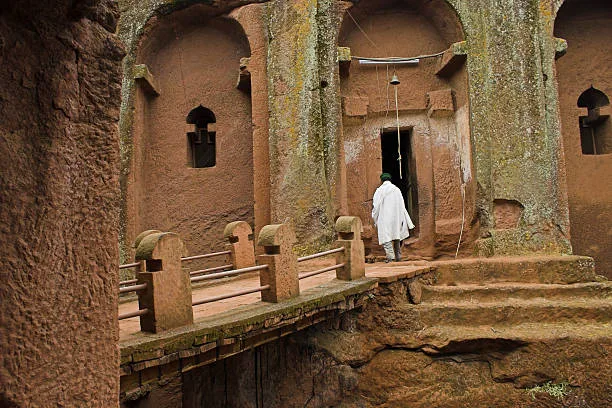
High in the Lasta Mountains of Ethiopia, at an altitude of 2,630 meters, lies a town that shouldn't exist. Lalibela isn't just a destination; it is a miracle of engineering and a "living" testament to a king’s obsessive vision. While most of the world builds upward toward the heavens, the people of Lalibela carved downward into the red volcanic earth.
Where History Meets the Earth
Lalibela is located in the northern highlands of Ethiopia. Formerly known as Roha, it was the capital of the Zagwe Dynasty. Today, it is a UNESCO World Heritage site and home to 11 medieval monolithic churches that have remained active centers of worship for nearly 900 years.
🏺 The Untold Story: A King, a Vision, and "Angels"
The history of Lalibela is a blend of geopolitical strategy and mystical legend.
The Vision: In the 12th century, after Jerusalem fell to Muslim forces, King Lalibela sought to build a "New Jerusalem" so Ethiopian pilgrims wouldn't have to make the dangerous trek to the Holy Land. He even named the local stream the River Jordan.
The Divine Laborers: Legend has it that while human laborers worked with chisels and axes during the day, angels descended at night to double the progress. This explains how such a massive feat—carving entire churches, including pillars, windows, and drainage systems, out of a single block of stone—was completed in just 23 to 24 years.
The Secret Pillar: Inside Biete Maryam (House of Mary), there is a pillar wrapped in cloth. Priests claim it is inscribed with the past and future of the world, written by the hand of God. To this day, it remains covered, its secrets known only to the high clergy.
🏛️ The Three Groups of Wonders
The churches are split into three clusters, connected by a maze of dark, narrow tunnels and trenches designed to test the faith of those walking through them.
Church
Unique Feature
Biete Medhane Alem
The largest monolithic rock-hewn church in the world; looks like a Greek temple.
Biete Giyorgis
The most iconic church, carved in the perfect shape of a cross and standing in isolation.
Biete Golgotha
Said to be the final resting place of King Lalibela himself (closed to women).
Biete Maryam
Known for its beautiful frescoes and the "veiled" sacred pillar.
💡 Travel Tips for the Modern Pilgrim
The Entrance Fee: It's approximately $50 USD, valid for 5 days. It seems steep, but it supports the massive preservation efforts of these ancient structures.
What to Wear: You’ll be taking your shoes off constantly. Wear thick socks (the stone floors are cold) and slip-on shoes.
Hire a Guide: You will get lost in the tunnels without one. More importantly, they know the "untold" oral histories that aren't on the plaques.
Lalibela isn't a museum; it’s a heartbeat. Standing at the edge of a 15-meter pit, looking down at a church born from solid rock, you realize that here, the line between the physical and the spiritual is as thin as the dust on the floor.

Explore this article on HotSpot
Photos, reviews, and the full community get the app.

